Nokia Team Comms (NTC)

Nokia Team Comms (NTC)

Redesigned Nokia Team Comms, a mission-critical communication platform to support BYOD, richer collaboration, and real-time situational awareness for industrial teams operating in high-risk environments.

Redesigned Nokia Team Comms, a mission-critical communication platform to support BYOD, richer collaboration, and real-time situational awareness for industrial teams operating in high-risk environments.

Category

May 15, 2024

Mobile + Web App

Mobile + Web App

Services

May 15, 2024

Product Design

Product Design

Client

May 15, 2024

Nokia

Nokia

Year

May 15, 2024

2025

2025

Context

Nokia Team Comms is a mission-critical communication platform used across factories, ports, and mines — environments where safety depends on instant, reliable communication.

Historically, workers used rugged devices with physical push-to-talk buttons. But as Nokia’s customers moved toward BYOD (bring your own device), this model no longer fit.

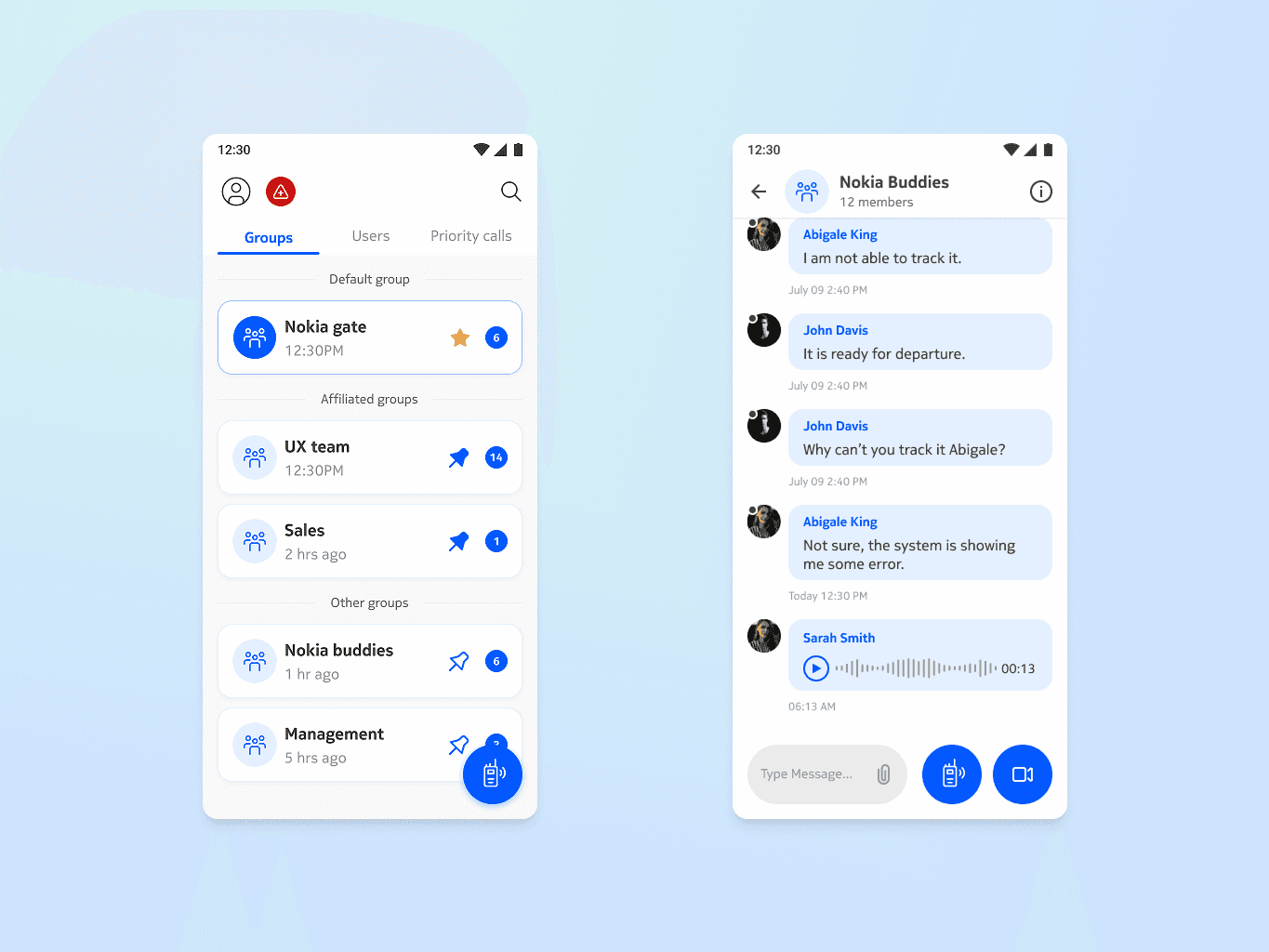
Our challenge was to reimagine that experience for modern smartphones — preserving the reliability of a professional radio while making it feel as intuitive as any mobile app.

The Challenge

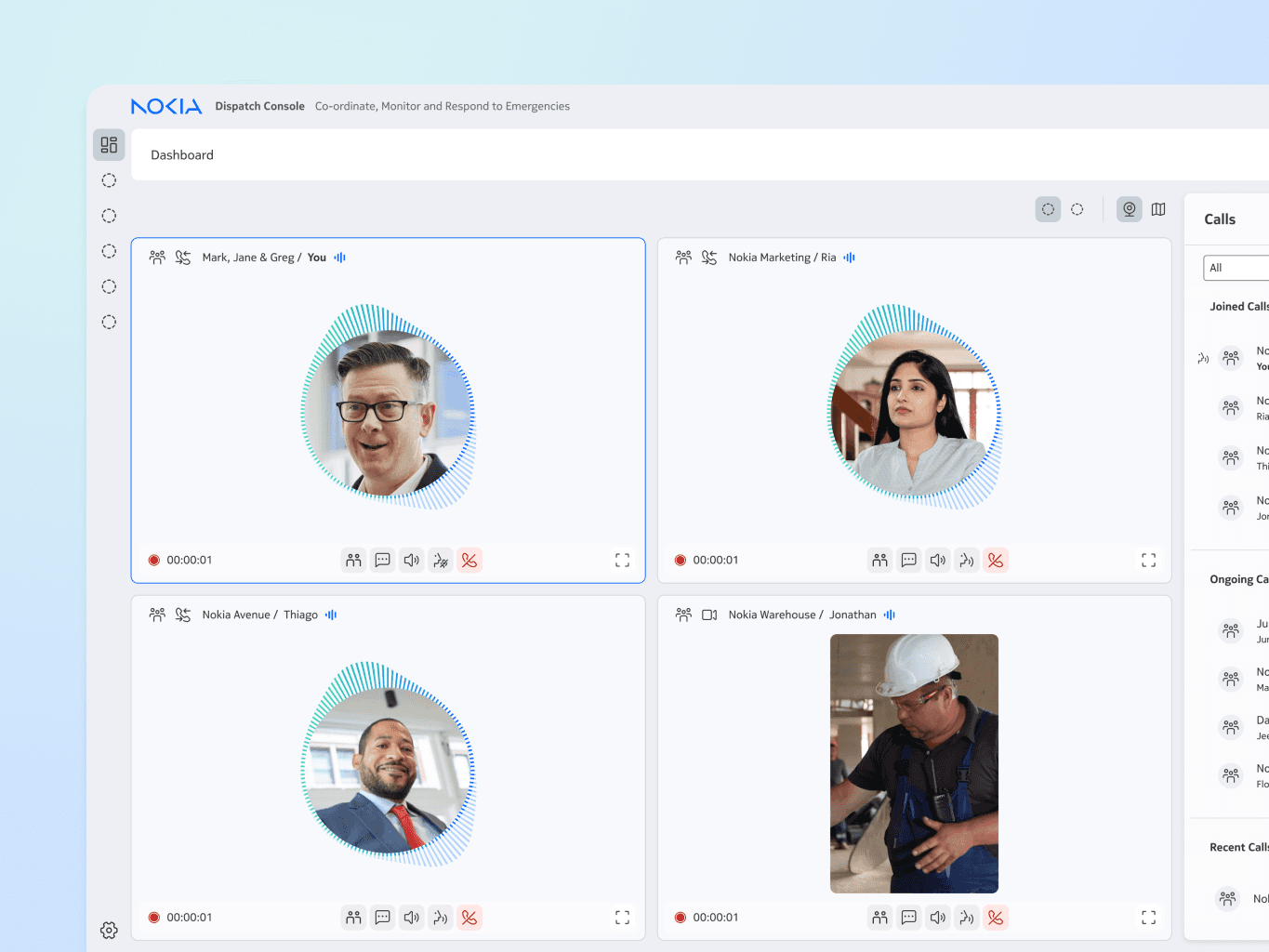
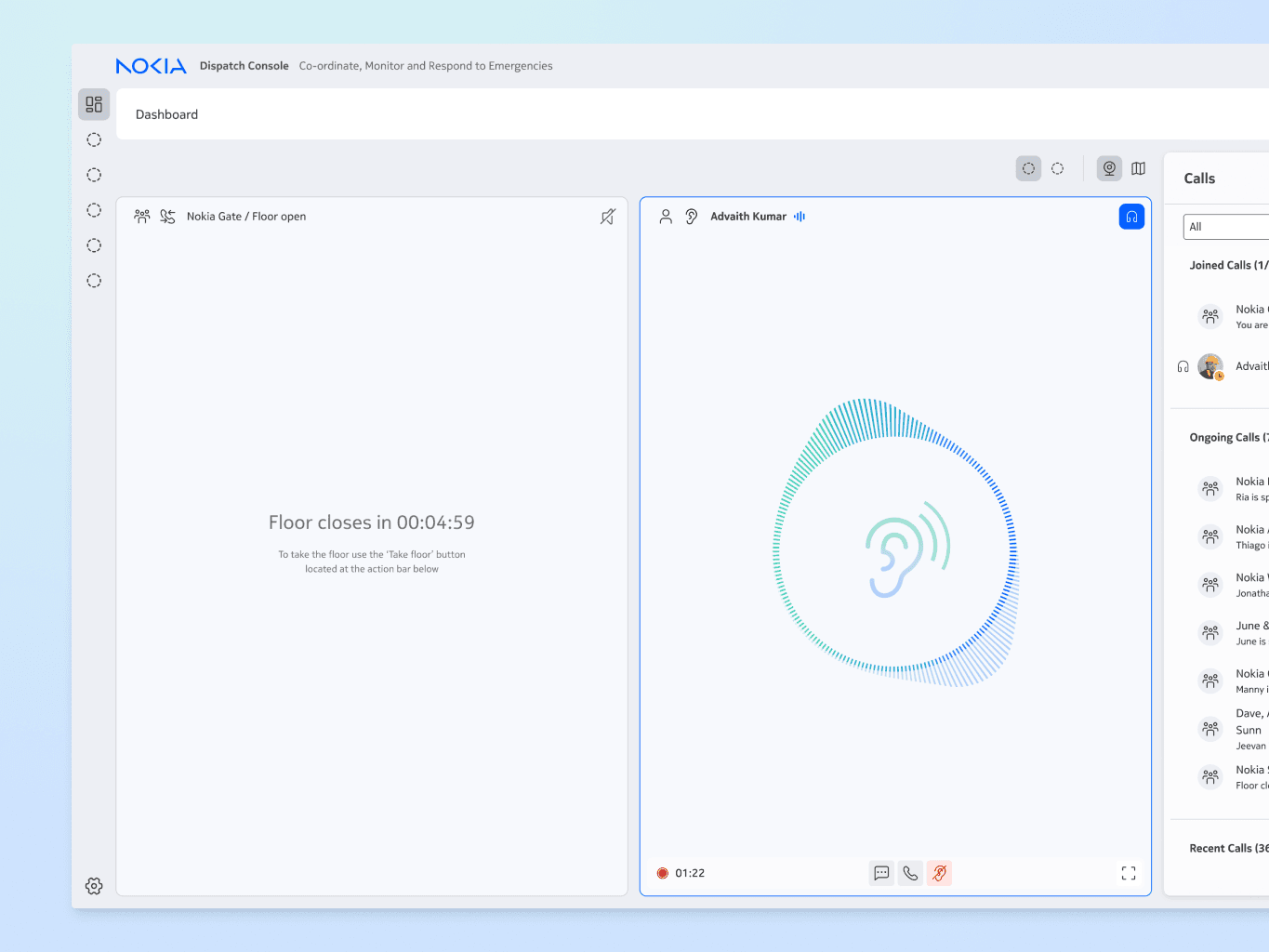
The earlier system only supported basic voice communication and ran on custom hardware. It lacked a central dispatch console, making coordination across sites difficult.

Customers had also long requested the ability to share photos, videos, and other multimedia attachments within chat conversations — a crucial feature for faster incident reporting and richer collaboration.

The design goal was clear: make it modern and familiar, but never compromise its mission-critical reliability.

My Role and Team

I led the project as Design Director, working with a compact two-person design team.

On Nokia’s side, we collaborated with the Head of Applications, product managers, and engineers across Android, iOS, and web.

Because this was Nokia’s first time working with an external design partner, my early focus was on building trust and alignment. I ran vision workshops to unify different internal perspectives and create shared clarity on the design priorities.

Approach

Given the client’s startup-like working style, we adopted an agile, bias-toward-action approach — rapid prototyping over documentation.

We built interactive prototypes in Figma early and iterated quickly, using Figma Mirror to test directly on devices and experience how it felt in real use.

We leveraged the Nokia Design System to ensure consistency and accessibility, extending it to support both mobile and desktop contexts.

Responsibilities were clearly defined: the senior designer managed alignment and pacing, while the mid-level designer focused on visual craft and prototyping — ensuring speed without sacrificing quality.

Design Craft

The redesign focused on clarity, speed, and confidence — essential traits in high-stress industrial environments.

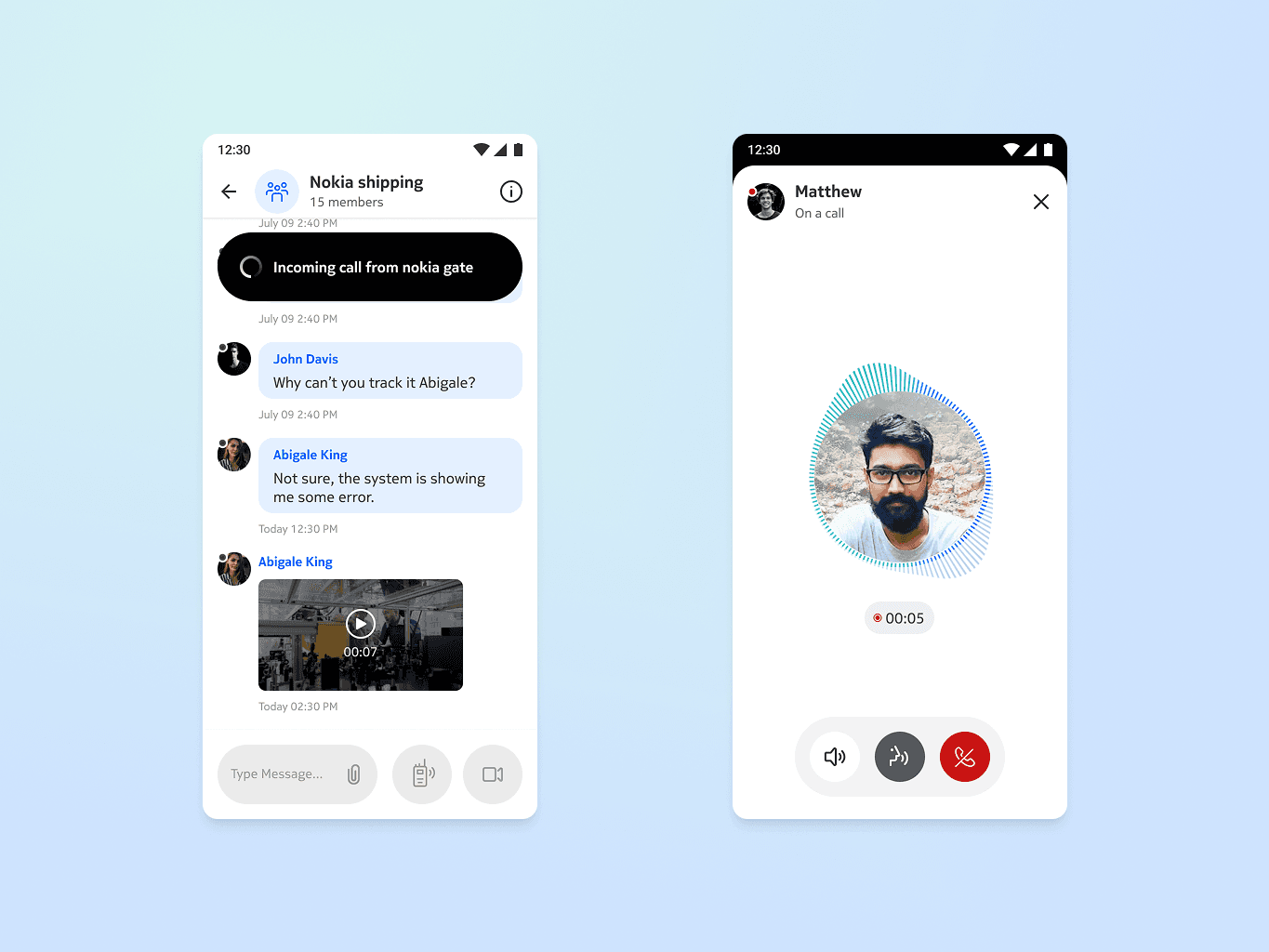
We introduced rich multimedia messaging, allowing users to attach images, videos, audio notes, and location data directly in chat threads.

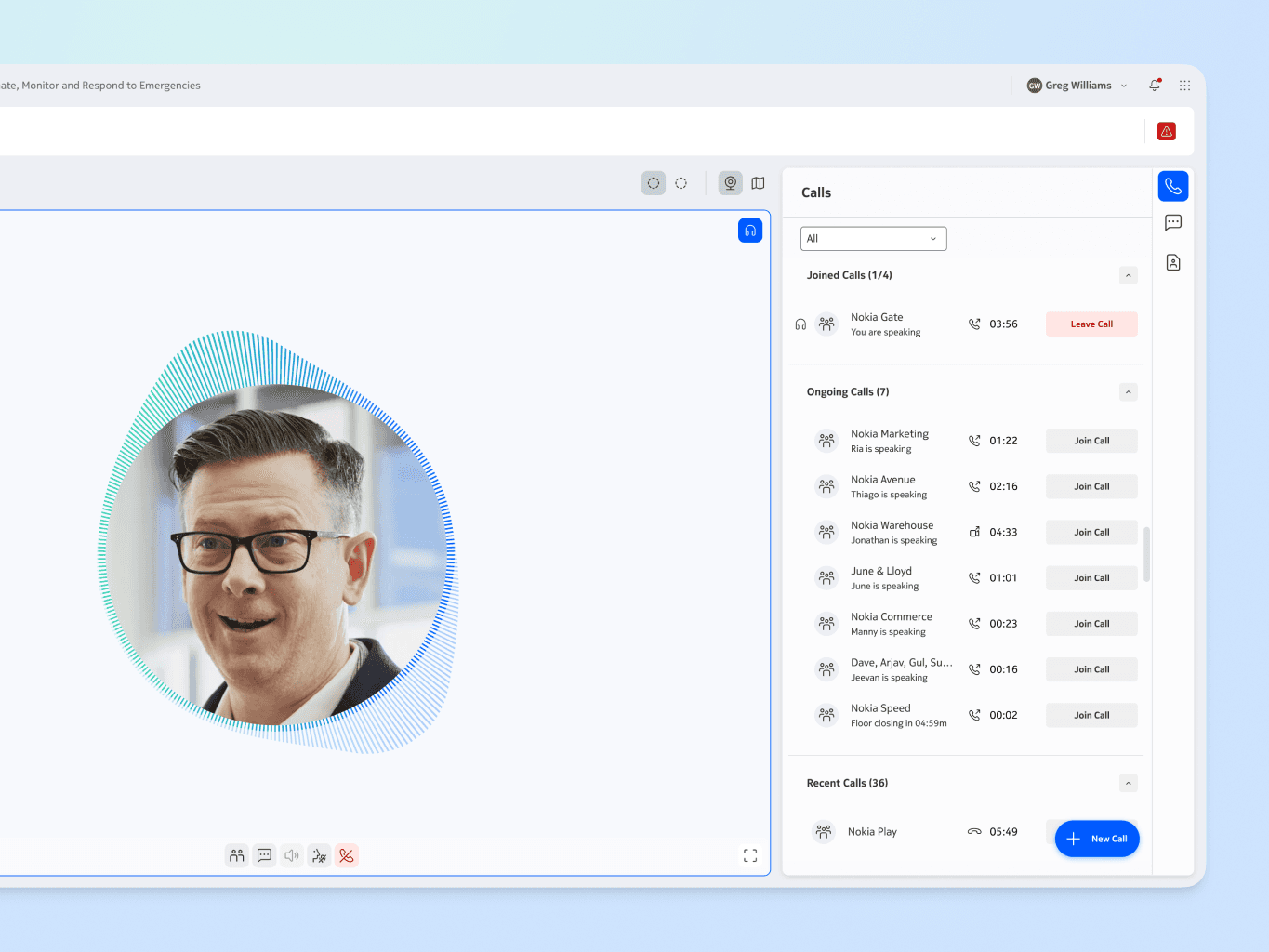
This feature transformed how teams communicated: dispatchers could now visually assess situations in real time, improving coordination and decision-making.

We also replicated the feel of physical communication through digital tactility — subtle haptics and audio tones that confirmed push-to-talk actions, ensuring the user’s confidence even without physical buttons.

Across mobile and console interfaces, we maintained visual consistency while optimizing each for its distinct use case: speed in the field, awareness in the control room.

Impact

The redesigned experience was met with overwhelming appreciation. The Head of Applications personally commended the team for our precision, clarity, and craft.

NTC became a key part of Nokia’s industrial digitalization portfolio and was proudly showcased on their LinkedIn channels.

Reflection

This project reinforced the value of clarity and confidence in design for mission-critical systems.

If I could change one thing, I’d bring real end users into testing earlier to validate our assumptions in context.

It remains one of the most rewarding projects I’ve led — where leadership, collaboration, and craft came together to deliver tangible impact.