Context
The Novartis Foundation is on a mission to improve the heart health of 150 million people across 30+ cities through its global initiative, CARDIO4Cities (C4C).
C4C applies a population health approach to address cardiovascular risk factors like hypertension — particularly in low- and middle-income countries, where up to 80% of cardiovascular deaths occur.
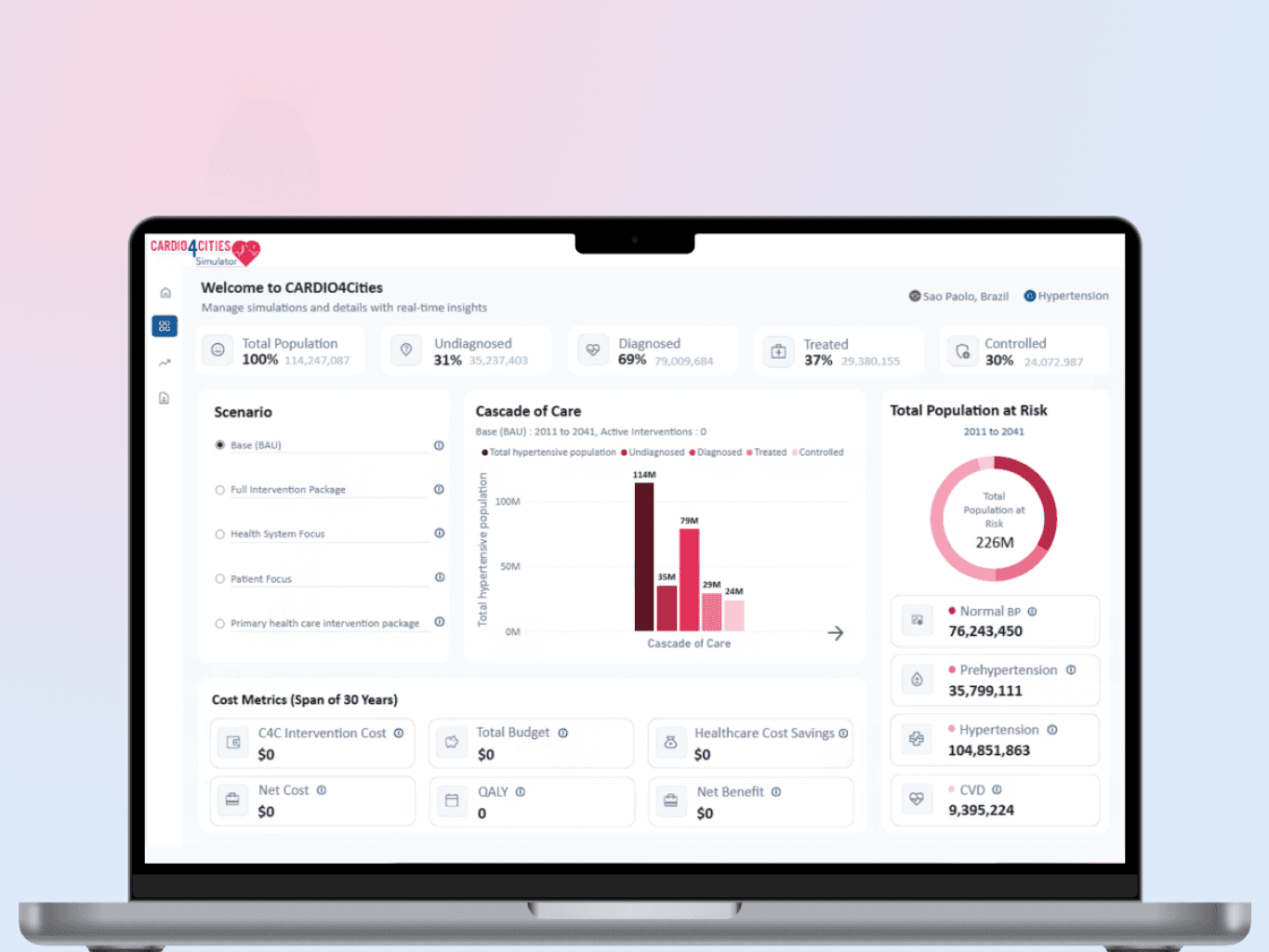
To help cities plan and evaluate interventions, the Foundation and the Swiss Tropical and Public Health Institute (STPH) created the C4C Simulator — a population health simulation tool.
Designit, in collaboration with Wipro, was brought in to define a North Star vision for C4C and reimagine the simulator experience to support global scaling and adoption.
The Challenge
At first glance, the ask seemed simple.
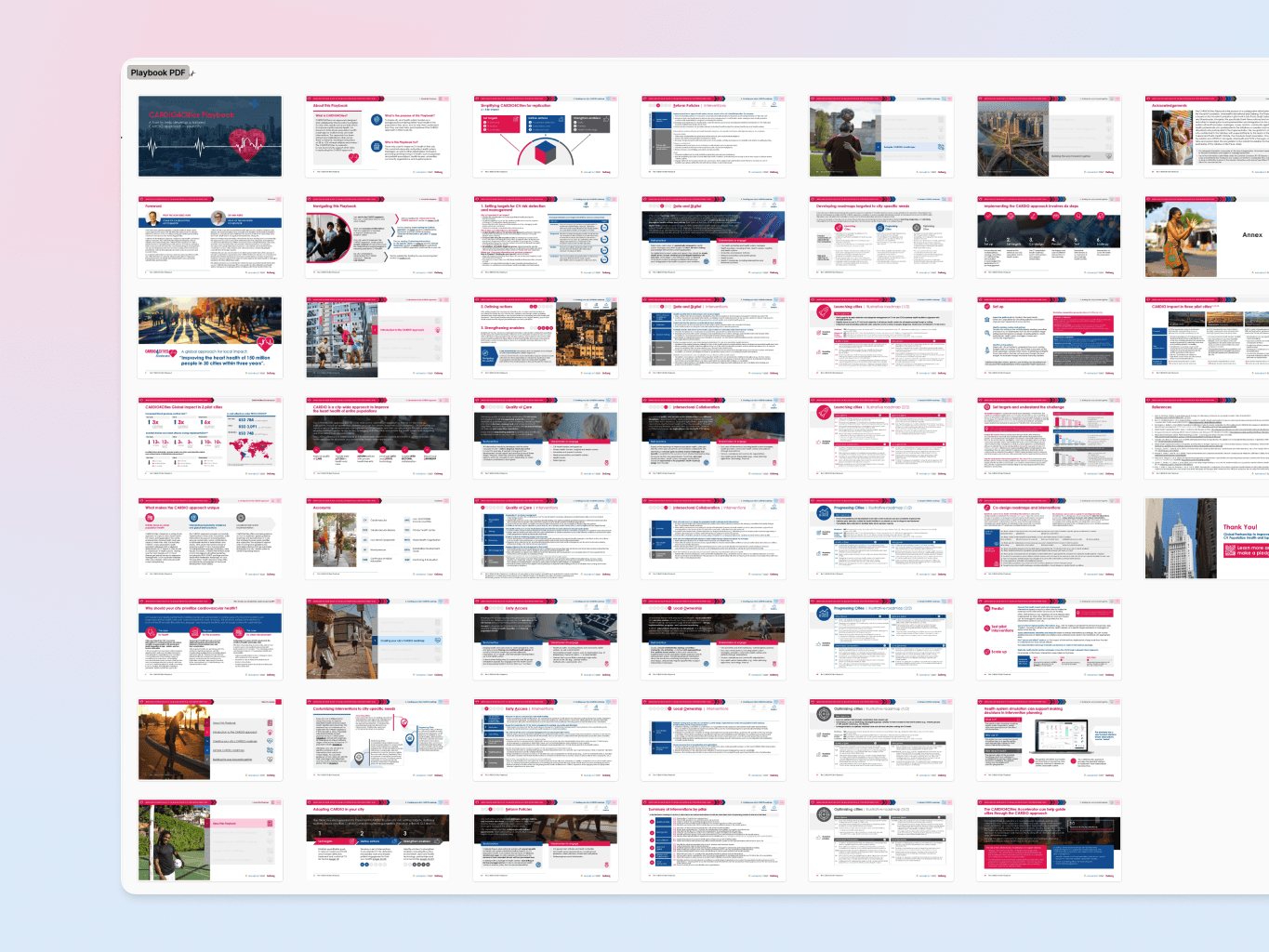
Digitize a PDF playbook into a website.
As we engaged deeper, a larger challenge emerged.
The existing simulator was technically constrained, confusing to navigate, and difficult to scale.
More critically, the Foundation faced a communication gap.
City authorities struggled to understand the value C4C could bring to their populations.
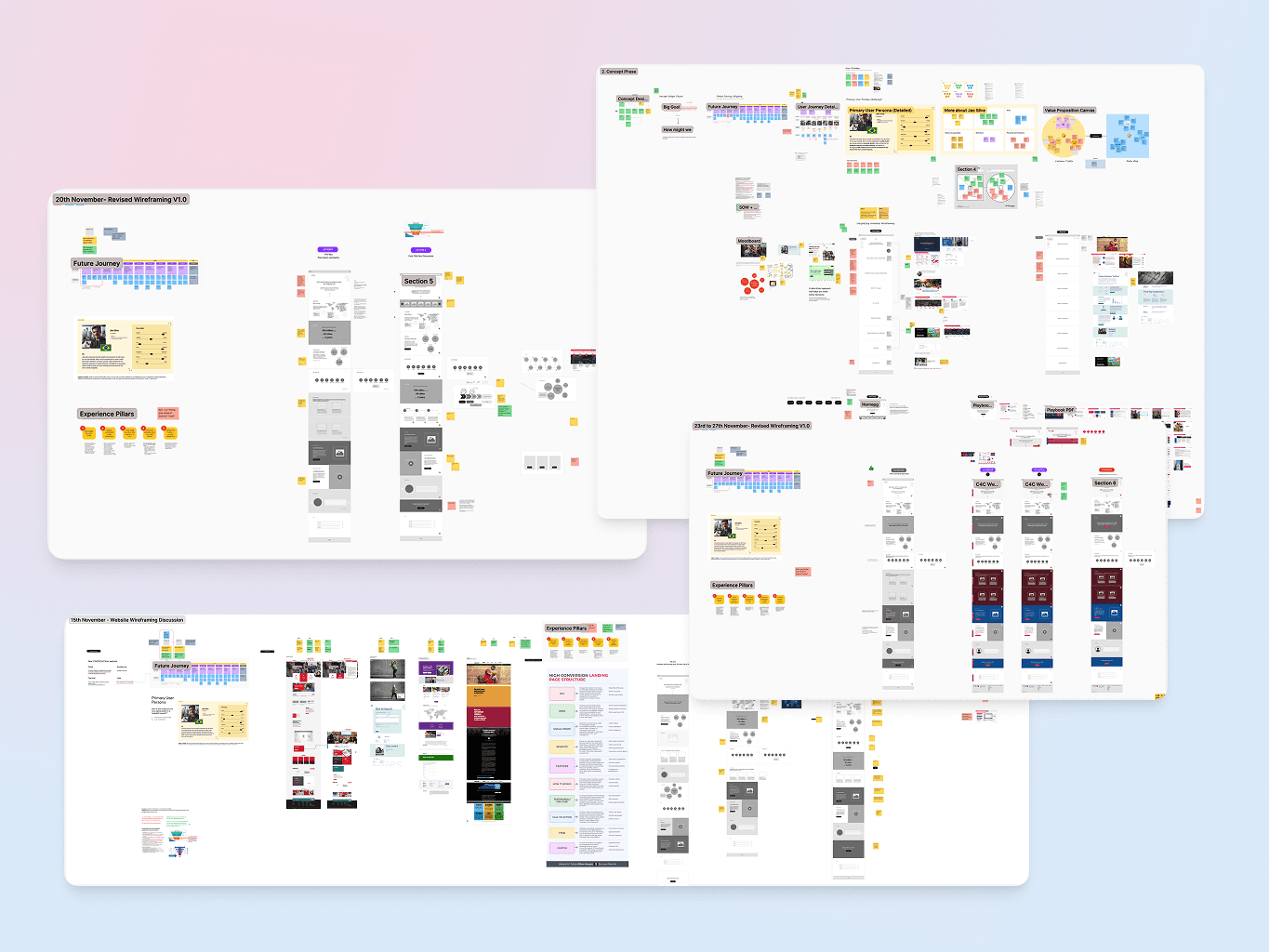
Through strategic alignment and vision-setting workshops that I conceptualized and led, we reframed the problem.
This was not about digitizing information.
It was about designing belief, trust, and understanding through experience.
This shift became the inflection point for the engagement.
Approach
We combined systems thinking, human-centered design, and cross-stakeholder facilitation.
Phase I — Reframing the Ask
Led workshops to uncover the real problem behind the brief
Shifted the conversation from digitization to strategic storytelling
Delivered a focused landing experience to introduce the C4C vision
Phase II — Improving the Experience
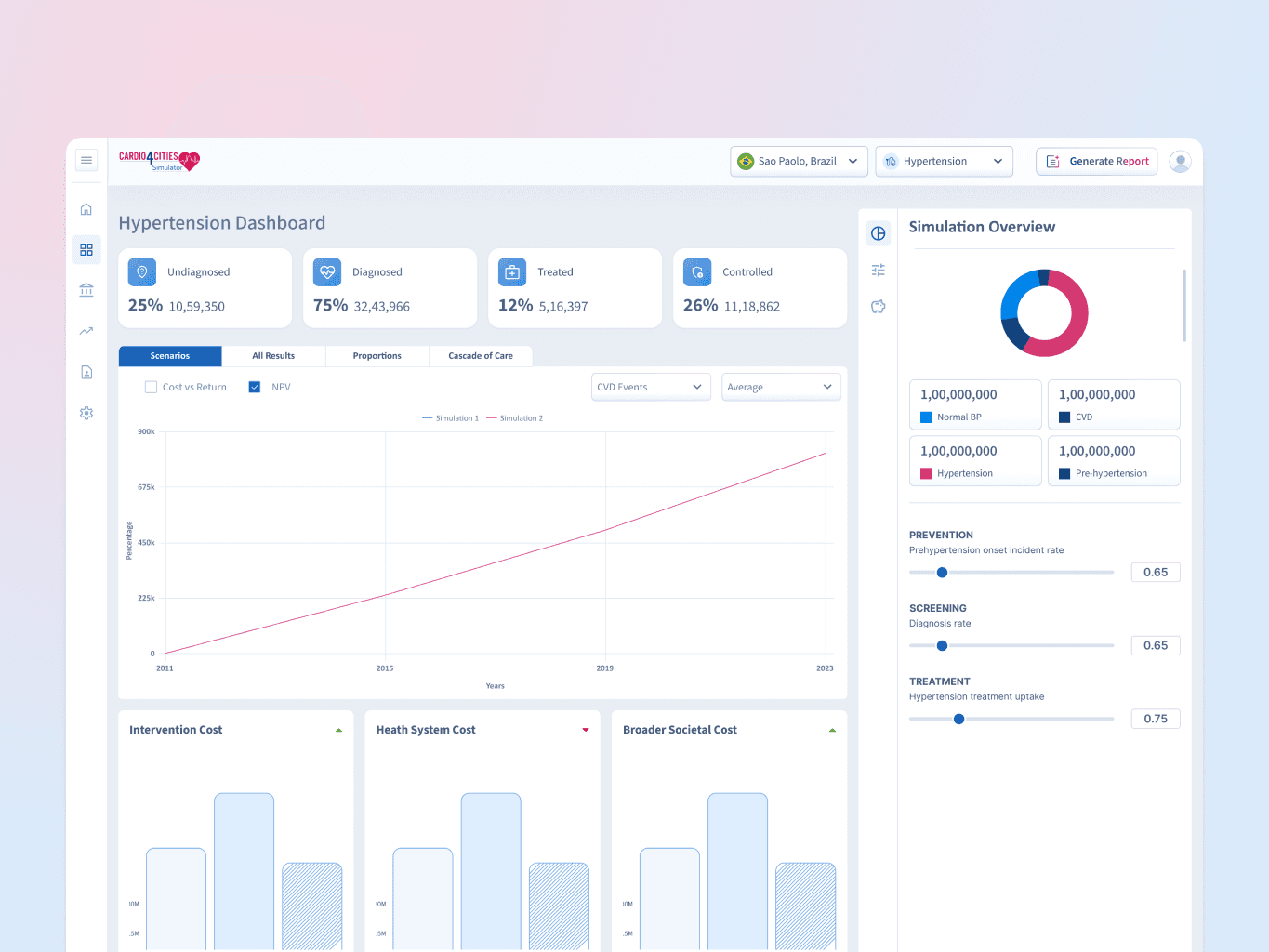
Redesigned the simulator within the constraints of Power BI
Simplified navigation and restructured data displays
Helped stakeholders see the value of a design-led approach
Phase III — Defining the Future
Conceptualized the web-based simulator (v2.0)
Introduced AI-assisted policy briefs and multilingual access
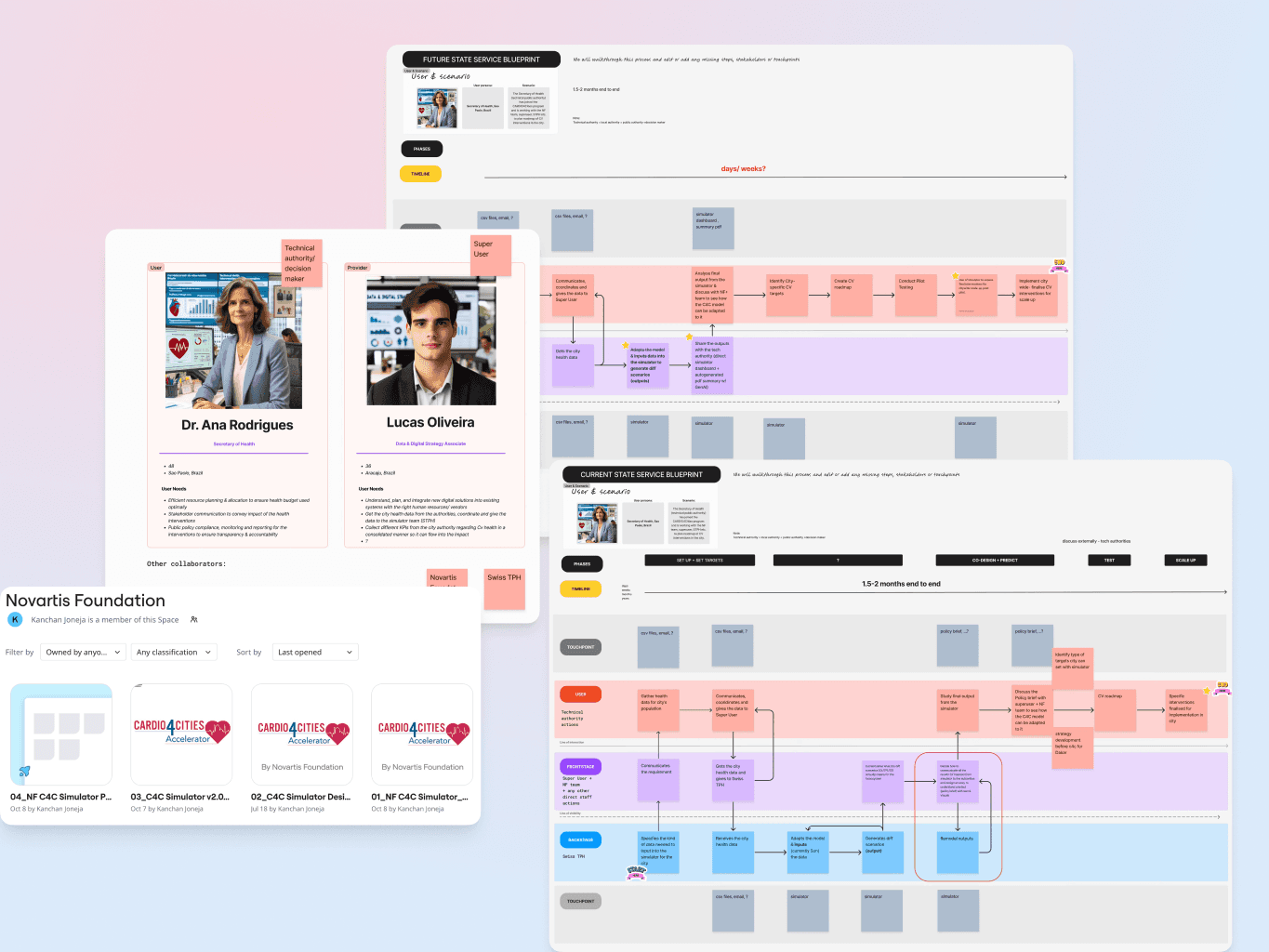
Created a North Star vision document used as a living alignment tool
Craft
The design work focused on clarity, credibility, and scale.
User Experience
Simplified complex simulations into clear decision journeys
Designed dashboards for decision-making, not data display
Made assumptions and data sources visible to build trust
Information Design
Created a consistent narrative aligned with the C4C mission
Improved charts and visual hierarchy for faster interpretation
Reduced cognitive load through summaries and contextual cues
Design Systems
Built reusable Figma components to support engineering
Ensured designs translated directly into development effort
Set foundations for future disease areas and city expansion
Prototyping
Delivered high-fidelity interactive prototypes
Reviewed designs with super users and policymakers
Iterated based on real-world feedback
Leadership
My role extended beyond design delivery to alignment and orchestration.
Cross-Organizational Alignment
Bridged Designit, Wipro, and Novartis Foundation priorities
Unified design, engineering, science, and leadership perspectives
Strategic Advocacy
Guided stakeholders toward a web-based simulator investment
Communicated long-term value across time, cost, and scalability
Team Leadership
Led a team of three designers across strategy and UX
Ensured design remained the driver of decision-making
Design leadership here meant turning complexity into shared clarity.
Impact
Organizational
Shifted Designit from vendor to strategic partner
Aligned over 30 global and local partners around a shared vision
Set the foundation for Phase 3 of the simulator
Operational
Reduced policy brief creation effort by 70–80 percent
Accelerated onboarding and scenario comparison
Improved coordination between global and local teams
Human
Helped city officials interpret data faster
Enabled more confident, data-driven health decisions
Reflection
This project reinforced that design leadership in complex systems is about mindset change.
The work started as a request to digitize a document.
It became a reframing of how a global health initiative communicates impact.
The biggest lesson was learning when to slow down execution to create alignment — and when to push forward with conviction.
Takeaway
Leadership Focus
Vision setting
Strategic reframing
Cross-functional orchestration
Design Outcome
A scalable, human-centered simulator that turns population health data into action.